Welcome to my page, where I share the 3D images, which I’ve created with the help of Stereo Photo Maker.

Click on any of the images below to open the Gallery View for that set of pictures. From the gallery view, click on any image to open it in the 3D viewer. Once you are in the 3D viewer you can use the left and right keys on your keyboard to see the next image. Or use the “Prev” “Next” menu items at the top to move to the previous or next image. You can also set them to automatically advance as a slide show. Just set the time to view each image under the “Slide” dropdown menu.

Scroll to the bottom of this page to see further instructions on how to view these 3D images

Enjoy!

3D Gallery - Harpers Ferry WV

CLICK HERE to open the gallery of 3D images for Harpers Ferry National Historical Park, which sits at the dramatic meeting point of the Potomac and Shenandoah rivers, where West Virginia, Virginia, and Maryland converge, and where layers of American history—from Thomas Jefferson’s awe at the river gap to John Brown’s 1859 raid—intersect with sweeping Blue Ridge scenery. Less widely known is that Meriwether Lewis sourced weapons for the Lewis and Clark Expedition here, that the town changed hands eight times during the Civil War, and that Storer College—founded in 1867 within the park—became one of the first institutions in the nation dedicated to the education of formerly enslaved people.

3D Gallery - FRG trip to the Water Sinks Preserve

CLICK HERE to open the gallery of 3D images to Owl Cave and the Water Sinks Karst Preserve. Owl Cave and the Water Sinks Preserve sit within the Burnsville Cove area of Highland County, Virginia, a region known for its dramatic karst geology, deep sinkholes, and extensive cave systems. The Water Sinks Karst Preserve protects a cluster of significant caves—including Owl Cave, Water Sinks Cave, the Subway, and Helictite Cave—set amid rugged terrain and scenic walking trails. Owl Cave itself, once known as Siphon 1 and Siphon 2, is part of this larger karst depression where multiple surface streams ultimately drain underground. The preserve is managed for conservation and controlled access, requiring visitors to sign waivers in advance and follow responsible caving practices to protect fragile formations and maintain long-term access.
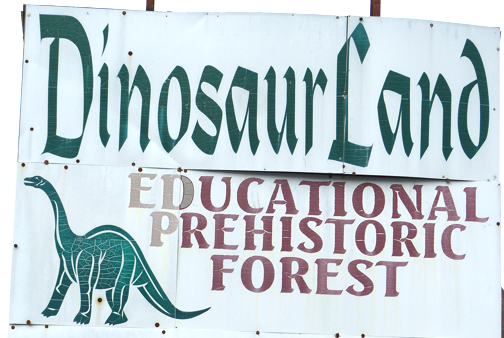
3D Gallery from Dinosaur Land, White Post VA

CLICK HERE to open the gallery of 3D images from Dinosaur Land. Dinosaur Land began in 1963 when local entrepreneur Joseph Geraci opened a roadside gift shop called Rebel Korner in White Post, Virginia. Inspired by the fiberglass dinosaurs he had seen elsewhere, Geraci commissioned artist James Q. Sidwell, known for his work with the Field Museum in Chicago, to create large prehistoric figures to draw travelers off U.S. Routes 340 and 522. The first five dinosaurs were such an immediate attraction that Geraci expanded the concept, eventually renaming the site Dinosaur Land in 1967. Today, Dinosaur Land remains a family-run attraction and a beloved piece of mid‑century Americana, still welcoming visitors with its towering T. rex and other classic fiberglass giants.

3D Gallery - Carlsbad Caverns National Park

CLICK HERE to open the gallery of 3D images Carlsbad Caverns – a vast underground labyrinth in southeastern New Mexico, formed not by rainwater like most caves but by sulfuric acid rising from deep below, which carved out enormous chambers such as the Big Room—an 8‑acre space large enough to hold several football fields. Hidden beneath the Chihuahuan Desert, the caverns contain rare formations like gypsum chandeliers and hydromagnesite “balloons,” and they sit within a landscape that was once an ancient reef in a prehistoric sea. The site is also home to a dramatic nightly bat flight each summer, when hundreds of thousands of Brazilian free‑tailed bats spiral out of the natural entrance, and it even houses a historic underground lunchroom built in the early 20th century, one of the few places on Earth where visitors can dine nearly 750 feet below the surface.

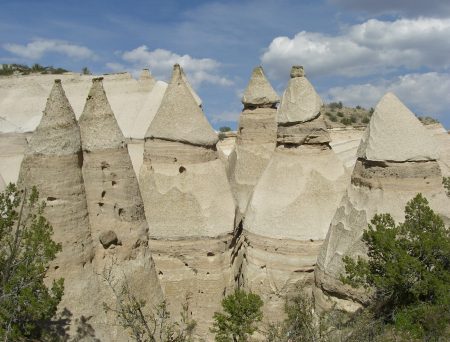
3D Gallery - Tent Rocks National Monument

CLICK HERE to open the gallery of 3D images for the Kasha-Katuwe Tent Rocks National Monument in north-central New Mexico is known for its striking cone‑shaped “tent rock” formations—sculpted from layers of volcanic pumice, ash, and tuff deposited 6–7 million years ago—and for its narrow slot canyons and scenic hiking trails on the Pajarito Plateau. The monument, whose Keresan name means “white cliffs,” sits near Cochiti Pueblo and features hoodoos up to 90 feet tall, shaped over millennia by erosion and capped in places by harder boulders that slow their decay. Today it is managed by the Bureau of Land Management with a reservation‑only entry system, offering visitors a chance to explore its geology-rich landscape through trails like the Cave Loop and the Slot Canyon route.

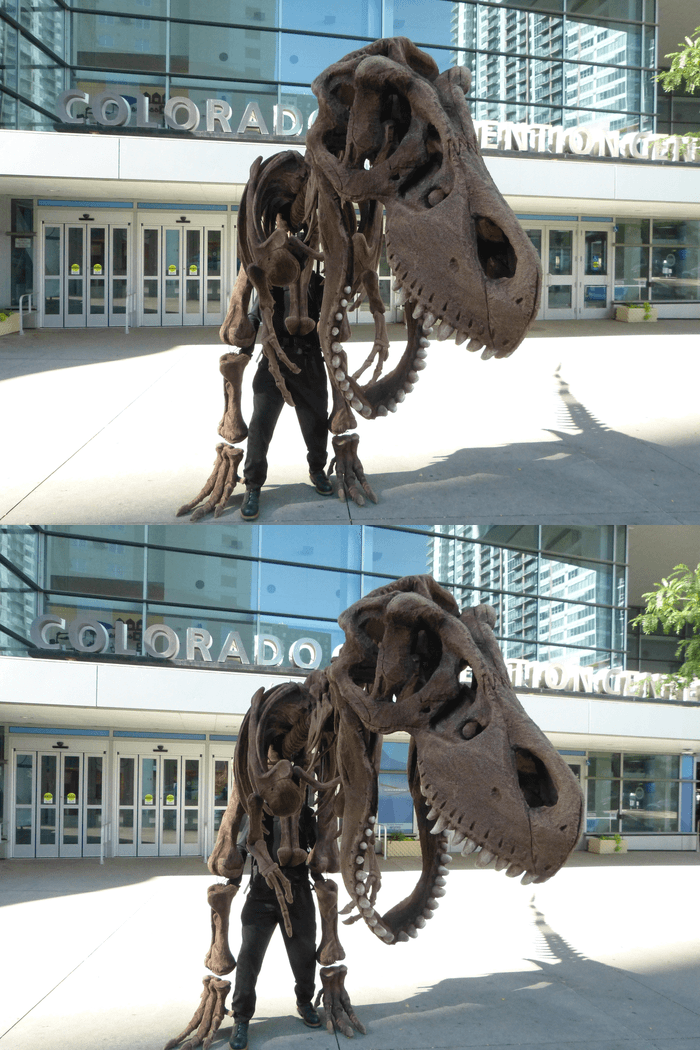
3D Gallery from the 2023 Denver Gem Show

CLICK HERE to open the gallery of 3D images from the 2022 Denver Gem & Mineral Show. The Denver Gem & Mineral Guild’s February Show traces its origins to the mid‑20th‑century rise of Colorado’s rockhounding clubs, which began organizing small public exhibitions to share mineral specimens, lapidary work, and geological education. The Guild itself was founded in 1964 as part of this growing community, and its annual February event, now held at the Jefferson County Fairgrounds has become a long‑running tradition focused on hands‑on learning, family‑friendly activities, and scientific outreach. 

3D Gallery from the 2022 Hardrock Summit

CLICK HERE to open the gallery of 3D images from the 2022 Hardrock Summit. The Hardrock Summit is a relatively new but fast‑growing gem, mineral, fossil, and jewelry event that debuted in September 2021 in downtown Denver. By 2023, the event was drawing thousands of attendees and collaborating closely with organizations such as the American Gem Trade Association and the Denver Gem & Mineral Show.

3D Gallery from the 2021 Hardrock Summit

CLICK HERE to open the gallery of 3D images from the 2021 Hardrock Summit. The Denver Gem & Mineral Show, held each September, began in 1967 when six Denver‑area gem and mineral clubs combined their individual mid‑century exhibitions into a single large event, forming what is now the Greater Denver Area Gem & Mineral Council. This consolidation transformed a collection of small hobbyist shows into what would become one of the most significant mineral exhibitions in the United States, long hosted at the Denver Merchandise Mart. After the demise of the Mart (a victim of the Pandemic) they joined with forces with the new Hardrock Summit, which was held at the Denver Convention Center.

How to view the 3D images

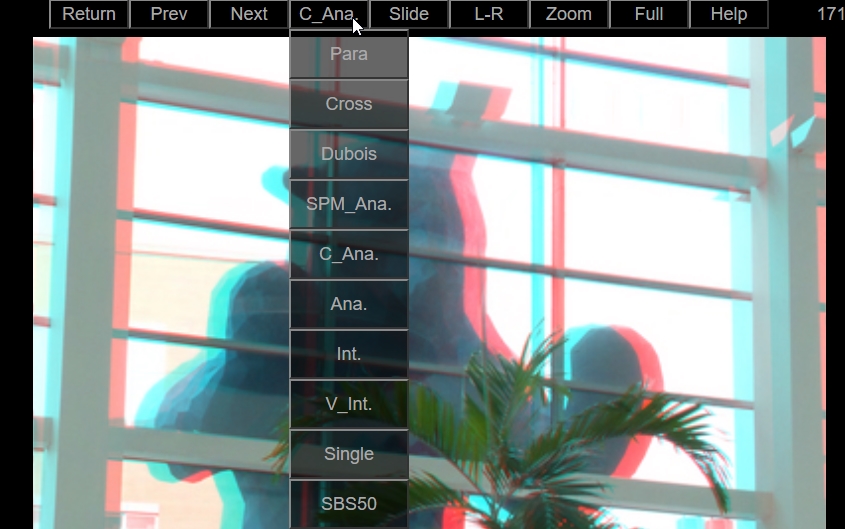
Anaglyph Menu

If you are viewing with Red/Blue 3D anaglyph glasses, choose either Dubois, SPM_Ana, C_Ana or Ana from the drop down menu. (Debois generally delivers the sharpest image.)

Red/Blue 3D Glasses
3d Viewer Menu

If you are using an antique Holmes Viewer, use your phone to view the gallery. Place your phone in the viewer where the stereo card would go, and select Para from the drop down menu.

Holmes Viewer

If you are using a Virtual Reality Headset, use your phone to view the gallery. Place your phone in the viewer. Select Para and set a time for each slide to show.

Virtual Reality Viewer

Here are two methods to “free view” in 3D on any smart phone without any special glasses!

3D Smart Phone viewing

The Parallel method – Select Para from the drop down menu in the 3D viewer. Stare at the pair of images. Hold the phone close so that your right eye sees the right image and your left eye sees the left image. Relax your eyes, or try focusing about a foot beyond your phone, until the two images merge into one 3D image. If you are having trouble, try using the Zoom function on the menu to make the images a bit smaller. (I am near sighted and normally wear glasses. This method works great for me, but only if I remove my glasses.)

The Cross-Eye Method – For this method, choose Cross from the drop down menu. Then focus your eyes in front of your phone so that you are looking cross-eyed at the screen with your right eye looking at the left image and your left eye looking at the right image. (See video) Again, this method only works for me if I remove my glasses.  If you are seeing it in 3D, but it doesn’t look quite right, you may need to switch the left and right image using the L-R function in the top menu. I find that very wide images may be easier to see cross-eyed and narrower images are easier to see parallel. Alternatively, wide images can be made smaller with the Zoom function on the top menu.

3D TV or Computer Monitor – If you have a 3D TV or Computer Monitor, you may be able to use the Int or V-Int settings in the viewer.

Dinosaur Gif

The Wiggle Method – If all else fails, you can try this one.  Wiggle 3d, also called wobble 3d  is created by switching back and forth between two stereo images.  It offers a sort of depth perception and works without any special hardware, even for people with limited or no site in one eye.

To do this, select Single from the drop down menu.  This allows you to see just one of the two stereo images.  Then repeatedly hit the L-R menu item to switch between the left and right images.

Here’s hope that the next generation of devices will make 3D even easier to view!

3D Laptop
Acer's Aspire 3D 15 Laptop Drives Glasses-Free 3D

This page last updated 3/2/2026

Leave a Reply

Your email address will not be published. Required fields are marked *